


Nutritional habits
The Nobel prize winning Greek poet Odysseas Elytis wrote, “If Greece is completely destroyed, what will remain is an olive tree, a vine and a boat; this is enough to begin again”. Indeed, some plants, like the olive tree, and the grapevines, have evidently been in Greece forever. In the 1953 Rockefeller Report entitled “Crete: a case study of an underdeveloped area,” where, Allbaugh mentions: “olives, cereal grains, pulses, fruit, wild greens and herbs, together with limited quantities of goat meat and milk, game, and fish consist the basic Cretan foods, but no meal was complete without bread. Olives and olive oil contributed heavily to the energy intake. Food seemed literally to be swimming into olive-oil”. In traditional Greek cuisine, olive oil is used in almost all culinary practices.
The cooking term “ladera”, originates from the word ladi, Greek for oil, and generally describes vegetables cooked in plenty of olive oil, onions, garlic, tomatoes and various herbs. These are the initial steps of making ladera dishes and the cooking practice of Greek cuisine called tsigarisma (sautéing)—basically to “sauté.” Onions and garlic would first be wilted or softened, for seconds, in a frying pan with a few tablespoons of hot olive oil, a practice that adds a certain depth of flavor. Subsequently, vegetables, grated tomatoes, various aromatic herbs, and a small amount of water is then added and the food is essentially left to cook on its own, traditionally over a low flame.
This combination of tomato, olive oil, garlic, onion and herbs in ladera, increases the amount of polyphenols and carotenoids. Lightly frying vegetables with olive oil makes the vegetables healthier. Olive oil has the ability to act as a food excipient, which helps to release and absorb bioactive compounds from garlic, onion and tomato.
[Trichopoulou, Antonia. (2022). Olive oil, Greek Mediterranean diet heritage and honoring the past to secure our future: Priorities for research and education. Frontiers in Nutrition. 9. 1058402. 10.3389/fnut.2022.1058402]

Photo of ladera presented in Gastronomos (https://www.gastronomos.gr/), Kathimerini Journal
[https://www.gastronomos.gr/syntagh/ta-ladera-fasolakia-tis-manis/52543/]
There is clear evidence that a significant portion of the population of Greece has moved away from the “healthy” traditional Mediterranean diet, with olive oil at its core. The HYDRIA survey population representative sample shows that, overall, only 28.3% of adults are now characterized as having a high adherence (score of 6–9 points) to the Mediterranean diet. About 39.7% of participants over 65 years old and 25.5% of participants under 65 years old were included in the high adherence category of the Mediterranean diet score. Key is the observation that adults consume levels of red meat, fruit and vegetables, that are not in line with international dietary recommendations. Based on the criteria, it is clear international dietary recommendations are not being met by most adults when assessing their intake levels of several macronutrients and selected foods.
With these insights into the dietary habits of adults in Greece it is possible to note that younger adults eat more meat, dairy and alcohol, which moves away from the lower to mid-level amounts that constitute the traditional Mediterranean diet consumption levels. They also eat lower amounts of fruit, legumes and vegetables, although older participants had comparably higher consumption in these categories. Even with contemporary moves toward acknowledging the benefits of the traditional Mediterranean diet translating into support for modifying dietary patterns toward incorporating key elements of the Mediterranean dietary pattern, younger generations in Greece are still moving away from beneficial food choices. The potential detrimental effects on mortality and morbidity in these observations are becoming clear.
Changes in diet could be attributed to the documented life-style changes impacted by the urbanization process. Urban living can have enormous and complex impacts on diets, including increased participation in the workforce which has corresponded to moves toward convenience foods rather than quality food choices, increased income levels which enable access to a larger range of foods which are not necessarily as nutritious, the wider availability of inexpensive poor nutritional quality foods (frequently of animal origin), and more readily available unhealthy packaged foods.
Considering the priorities for research and education on olive oil, as it is central to the Mediterranean diet, we assess each component of this dietary pattern, acknowledging that all are intertwined, since it is not easy to dissociate them. Within this context focus should be on the integrity and implementation of actions that will support and affect the development of compatible fiscal and pricing policies, school food and nutrition plans, food marketing, and nutrition labeling guiding principles. One example is utilizing the current societal trend of “Healthy Eating” paralleled with an increased demand for traditional, local and seasonal foods, that can translate into business opportunities for the catering sector. The focus could be on traditional options emphasizing the use of olive oil and on the traditional dishes.
[Trichopoulou, Antonia. (2022). Olive oil, Greek Mediterranean diet heritage and honoring the past to secure our future: Priorities for research and education. Frontiers in Nutrition. 9. 1058402. 10.3389/fnut.2022.1058402]
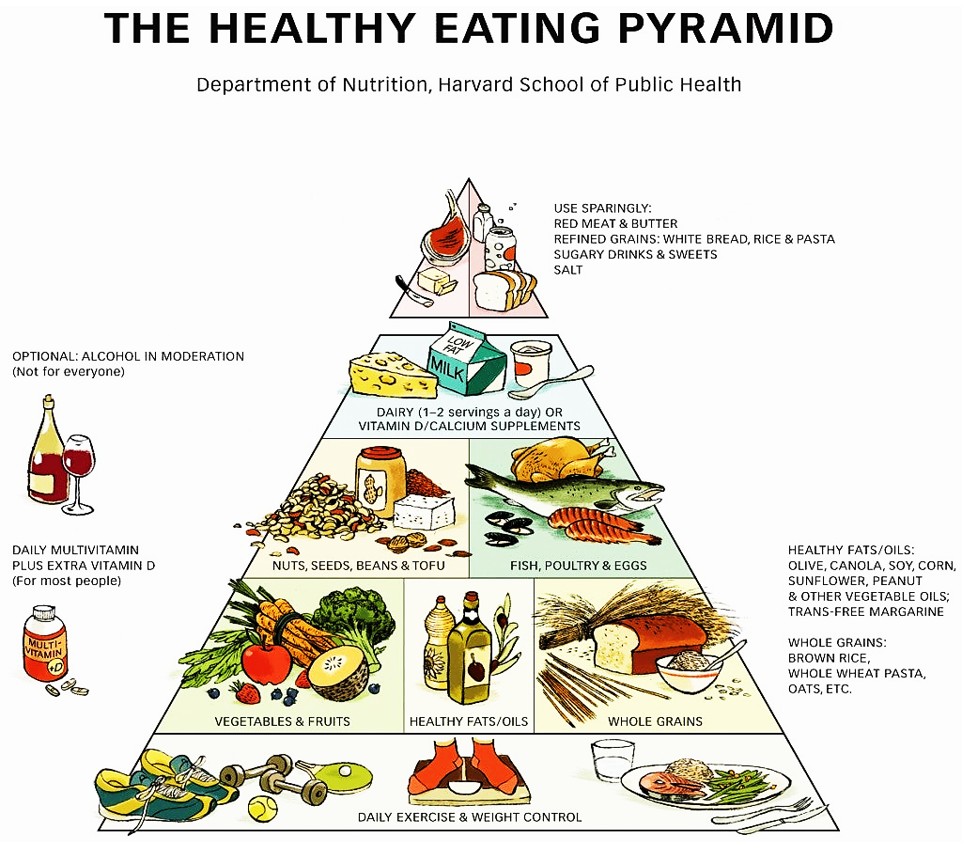
[Healthy Eating Pyramid, Copyright © 2008. For more information about The Healthy Eating Pyramid, please see: The Nutrition Source, Department of Nutrition, Harvard T.H. Chan School of Public Health, www.thenutritionsource.org, and Eat, Drink, and Be Healthy, by Walter C. Willett, M.D., and Patrick J. Skerrett (2005), Free Press/Simon & Schuster Inc.”]
Nutritional habits of youth
Several scientific findings suggest that childhood is a crucial period of life during which long-term healthy lifestyle factors are constructed and established that are consistently tracked later in life. In adolescence, healthy behaviors, such as dietary habits, advance well-being and health and relate to improved healthy behaviors during adulthood. Based on the Centers for Disease Control and Prevention guide to promoting health and preventing chronic diseases for schoolchildren, it is easier and more effective to establish favorable dietary habits during childhood and adolescence than trying to change them in adulthood. Healthy dietary habits in early life consist of a critical behavioral path that might manipulate the risk of cardiovascular disease and may help prevent the development of chronic diseases, such as excess body fat, type 2 diabetes mellitus, and sub-optimal immunity, in adulthood. The Mediterranean diet (MD) has long been associated with human health even in children and adolescents. Several studies have shown that the MD has encouraging effects against cardiovascular, metabolic, and mental diseases. Overweight/obesity among children and adolescents has alarmingly increased worldwide, regularly persists into later life, and may lead to an augmented risk of developing chronic disorders, even during childhood and early adulthood.
Although several factors contribute to childhood obesity, including genetic, biological, behavioral, social, cultural, and environmental factors, some of the most widely proposed theories involve poor eating patterns, insufficient physical activity, and sedentary lifestyles. Moreover, it is considered that the effect of the previously mentioned risk behaviors on obesity status is modified by sex and age. Scientific data propose differences in dietary habits between rural and urban areas exist due to different lifestyles in children and adolescents.
[Tambalis KD, Panagiotakos DB, Sidossis LS. Dietary habits among 177,091 Greek schoolchildren by age, sex, weight status, region, and living area. A cross-sectional study. Hellenic J Cardiol. (2024), Apr 16:S1109-9666(24)00079-4, doi: 10.1016/j.hjc.2024.04.004, PMID: 38636777]

[Tambalis KD, Panagiotakos DB, Sidossis LS. Dietary habits among 177,091 Greek schoolchildren by age, sex, weight status, region, and living area. A cross-sectional study. Hellenic J Cardiol. (2024), Apr 16:S1109-9666(24)00079-4. doi: 10.1016/j.hjc.2024.04.004. Epub ahead of print. PMID: 38636777]
Nutritional habits of youth
Because Greek schoolchildren do not fully adopt the traditional cardio-protective Mediterranean diet, it could be helpful to provide certain recommendations, especially for adolescents, to decrease the risk for future adverse health consequences. The findings of a nationally representative study revealed that Greek schoolchildren’s eating habits were relatively sufficient, whereas as children grew up from childhood to adolescence, their dietary habits became less healthy. In addition, unhealthy dietary habits were more prevalent in schoolchildren who were overweight/obese, than in those with normal weight. The encouraging message was that no noteworthy differences were recorded in the students’ dietary habits between urban and rural areas, as well as among the regions of the country. According to the study of Tambalis et al. (2024), Greek schoolchildren do not completely follow the typical cardio-protective MD diet, which may raise their chance of experiencing negative health outcomes in the future. This knowledge could be helpful in recommendations to make certain dietary habits (e.g., avoid high consumption of fast food and sweets) mainly in overweight and adolescents. Public health initiatives should endure challenges about the access to and affordability of healthy and high-quality food in childhood and adolescence.
[Tambalis KD, Panagiotakos DB, Sidossis LS. Dietary habits among 177,091 Greek schoolchildren by age, sex, weight status, region, and living area. A cross-sectional study. Hellenic J Cardiol. (2024), Apr 16:S1109-9666(24)00079-4, doi: 10.1016/j.hjc.2024.04.004, PMID: 38636777]
Nutritional habits of elderly citizens
The continuous increase in life expectancy leads to progressive population ageing, especially in most developed countries. A healthy diet and better consumption of tailored functional foods may represent one of the strategies to postpone or slow down age-related decrements, thus increasing healthy ageing and reducing healthcare costs. The research of Daniele et al. (2024), aimed to explore elderly people’s (>65 years old) eating habits and assess their awareness of food-health correlation.
In total, 511 Italian seniors answered a CATI (computer-assisted telephone interviewing) questionnaire through a deep, telephone interview to collect information about dietary habits, healthy food awareness, and inclination for functional foods. The elderly were divided into four groups according to gender and age: Early Elderly Female (n = 130), Early Elderly Men (n = 109), Late Elderly Female (n = 157), and Late Elderly Men (n = 115). The groups provided a positive self-assessment of health status and individual diet healthiness, which were both considered over “good enough” (5 on 10-point scale) and showed food consumption habits in line with the Mediterranean Diet (MD) principles. The daily diet was based on fruits, vegetables, bread, and pasta, with extra virgin olive oil as the main fat source, all over “often” consumed (4 on 5-point scale).
Old people also showed awareness of different food’s healthy properties. Specifically, females were more aware of food’s impact on health, considered close to “extremely healthy” (9 on 10-point scale), and strictly followed a MD. Participants also expressed optimistic expectations about functional food efficiency, evaluated as close to “extremely desirable” (8 or 9 on 10-point scale), against age-related problems, highlighting the most important as diabetes, overweight, intestine problems, and low mood. The interviewed elderly were also involved in virtual functional food co-creation, indicating through a basic matrix which, among the most familiar foods, could be the ideal functional food, focusing on fruits and vegetables. A pleasant odor/flavor, a liquid texture, and a warm serving temperature rather than cold characterized the virtual functional food created. Other positive attributes were liquid and thickness, while acidity and bitterness were among the least desired traits. These findings show how elderly people, despite predictable age-related sensory and cognitive loss, when properly involved and guided, can help envision foods that fit their needs and desires.
[Daniele, Giulia & Medoro, Chiara & Lippi, Nico & Cianciabella, Marta & Magli, Massimiliano & Predieri, Stefano & Versari, Giuseppe & Roberto, Volpe & Gatti, Edoardo, (2024). Exploring Eating Habits, Healthy Food Awareness, and Inclination toward Functional Foods of Italian Elderly People through Computer-Assisted Telephone Interviews (CATIs). Nutrients. 16. 762. 10.3390/nu16060762]
The unexpected effect of COVID-19
The aim of the study of Rodríguez-Pérez et al. (2020), was to evaluate whether dietary behaviors of the Spanish adult population were changed during the COVID-19 outbreak confinement. For that purpose, an online questionnaire, based on 44 items including socio-demographic data, Mediterranean diet (MedDiet) Adherence Screener (MEDAS) as a reference of a healthy diet, processed foods intake, changes in their usual food choices and weight gain was distributed using social media and random sampling. A total of 7514 participants (37% aged below 35 years, 70.6% female, 77.9% university-level education or higher) from all the Spanish territory completed the questionnaire.
The results outlined healthier dietary behaviors during the confinement when compared to previous habits. Overall, the MEDAS score (ranging from 0 to 14, whereby higher a scoring reflects greater adherence to the MedDiet) increased significantly from 6.53 2 to 7.34 1.93 during the confinement. Multivariate logistic regression models, adjusted for age, gender, region and other variables, showed a statistically significant higher likelihood of changing the adherence to the MedDiet (towards an increase in adherence) in those persons who decreased the intake of fried foods, snacks, fast foods, red meat, pastries or sweet beverages, but increased MedDiet-related foods such as olive oil, vegetables, fruits or legumes during the confinement. COVID-19 confinement in Spain has led to the adoption of healthier dietary habits/behaviors in the studied population, as reflected by a higher adherence to the MedDiet. This improvement, if sustained in the long-term, could have a positive impact on the prevention of chronic diseases and COVID-19-related complications.
[Rodríguez-Pérez C, Molina-Montes E, Verardo V, Artacho R, García-Villanova B, Guerra-Hernández EJ, Ruíz-López MD. Changes in Dietary Behaviours during the COVID-19 Outbreak Confinement in the Spanish COVIDiet Study. Nutrients, (2020), Jun 10; 12(6): 1730. doi: 10.3390/nu12061730. PMID: 32531892; PMCID: PMC7353108]